CBD patches for pain relief: how transdermal delivery changes the pharmacokinetics
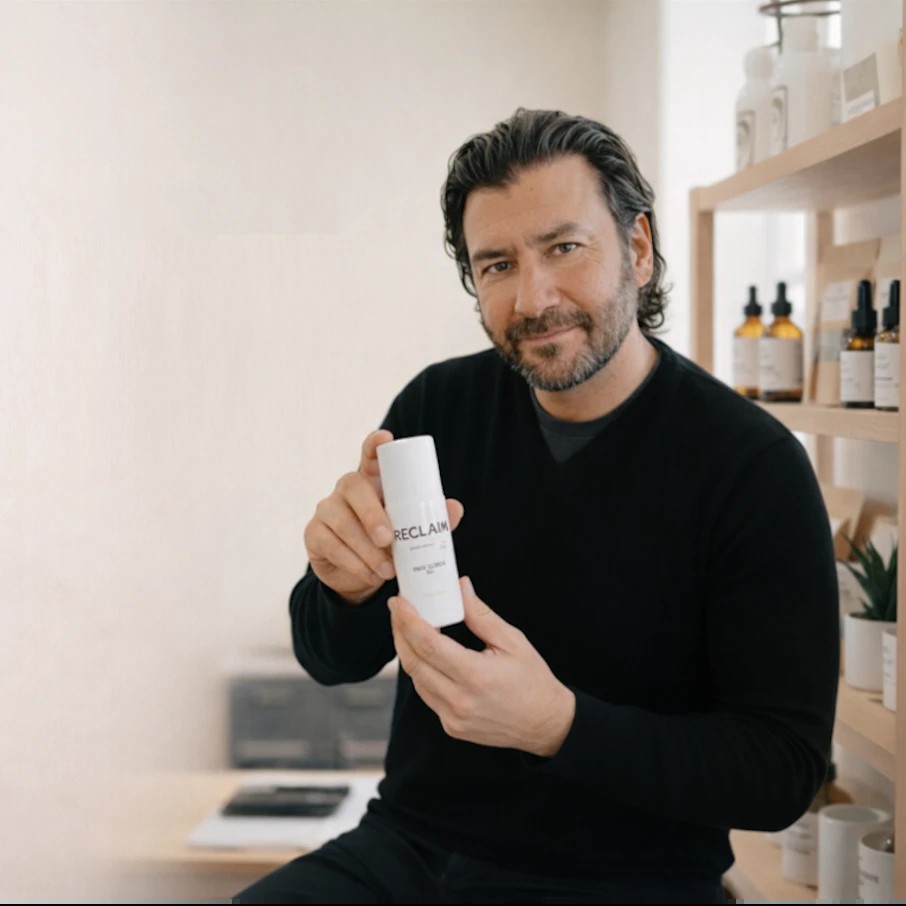
CBD patches for pain relief do something that CBD oil and CBD cream cannot: they deliver cannabidiol continuously into the bloodstream over 24 hours, bypassing the digestive system and the liver’s first-pass metabolism entirely. That pharmacokinetic difference is why I use the patch for specific purposes instead of - or alongside - the oil I take every day.
I’ve been taking CBD oil daily for years. It’s central to how I manage rheumatoid arthritis alongside my prescription medications, and it was a key part of what allowed me to finally get off 23 years of daily prednisone. The oil is my primary daily tool. The patch solves a different set of problems - and understanding the distinction between them makes it much easier to know whether a patch is what you actually need.
CBD topical vs CBD transdermal: the difference is where the compound goes
Most products sold as “CBD patches” are topicals in adhesive form. The CBD they contain penetrates the outer layers of skin and affects tissue directly beneath the patch, but it doesn’t enter the bloodstream in meaningful concentrations. These behave like CBD cream - local effect, no systemic distribution.
A true transdermal CBD patch is formulated to push CBD all the way through the skin barrier, into the capillary layer, and into systemic circulation. The matrix or reservoir system uses permeation enhancers to overcome the skin’s natural barrier function. Plasma levels become measurable. You get systemic anti-inflammatory and endocannabinoid effects - not just something happening at the skin surface.
This is not a marketing nuance. It’s a formulation difference with a substantial effect difference. A topical CBD patch may relieve a localized area; a transdermal CBD patch modulates the endocannabinoid system throughout the body. Checking whether a product is genuinely transdermal - rather than just a nice cream in patch form - is worth doing before buying.
Why bypassing liver metabolism matters for pain management
When you take CBD oil orally, it travels through the gut, gets absorbed into the portal circulation, and passes through the liver before entering systemic circulation. This is first-pass metabolism, and it has two meaningful consequences.
First: it reduces bioavailability. The liver’s CYP450 enzymes, particularly CYP3A4 and CYP2C19, metabolize a significant fraction of CBD before it reaches systemic circulation. This is why effective oral doses are relatively high - much of what you swallow never reaches the bloodstream unchanged.
Second: it creates drug interaction risk at the liver level. CBD inhibits these same CYP450 enzymes. This means CBD can slow the metabolism of other drugs processed by those pathways - blood thinners like warfarin, certain antiepileptics, some antidepressants, specific immunosuppressants used in RA treatment. This is real and matters for anyone managing complex medication regimens. The full picture on which medications have documented interactions is at /learn/drug-interactions/.
Transdermal CBD bypasses the gut and liver entirely. It enters circulation through the skin’s capillary bed. Peak concentrations are lower and rise more slowly, but steady-state plasma levels are more consistent. And the liver-level CYP450 interaction risk, while not completely absent, is meaningfully reduced. For someone taking multiple prescriptions for an inflammatory condition, the transdermal route is often pharmacologically cleaner.
What the plasma curve actually looks like
Oral CBD oil creates a standard pharmacokinetic curve: relatively fast rise to peak, then a drop over several hours. Taking it twice daily smooths this somewhat, but there are still peaks and troughs through the day.
A 24-hour transdermal patch creates a much flatter curve. Absorption is slow over the first 2-4 hours, reaches a steady rate, and maintains it until the patch is removed. The result is consistent plasma levels without meaningful peaks or troughs. For pain management specifically, a steady profile means consistent effect through the day and through the night without needing to redose.
The Hammell et al. 2016 study (PMID 26896294) is the primary pharmacology paper establishing transdermal CBD delivery. It found that transdermal CBD gel reduced inflammation and pain-related behaviors in a rat model of arthritis, with therapeutic plasma levels achieved without observable systemic adverse effects. The model is preclinical, but it validated the pharmacokinetic basis that formulated transdermal CBD products are built on.
Isolate vs broad-spectrum: why it matters for the patch specifically
The Reclaim Labs 50mg transdermal CBD patch uses CBD isolate - pure CBD with no other cannabinoids and critically no THC. This is the formulation that makes the patch drug-test-safe.
Full-spectrum and broad-spectrum CBD products contain trace amounts of THC (under 0.3% by federal law). With daily use, those trace amounts accumulate in fatty tissue. People who use broad-spectrum products regularly and then take a urinalysis sometimes test positive for THC metabolites - the concentration in any single dose is low, but the accumulation is real.
CBD isolate contains zero THC. A certificate of analysis from a third-party lab should confirm non-detect for THC at the limits of detection. The Reclaim Labs patch is tested to this standard.
The tradeoff is the absence of the entourage effect - the synergistic interaction between CBD, minor cannabinoids, and terpenes that many broad-spectrum users report enhancing efficacy. For the patch’s primary use cases - sustained 24-hour delivery and drug-test safety - isolate is the right formulation. For maximum subjective effect without drug testing concerns, the broad-spectrum oil may work better for you.
Who the patch is for vs who the oil is for
The patch makes more sense when:
- You’re subject to employment drug testing (isolate, no THC accumulation)
- You’re managing multiple medications where CYP450 liver interaction is a real concern (transdermal reduces liver-level CYP exposure)
- You want 24-hour coverage without remembering to redose twice a day
- You travel frequently and want a single application that covers a full day
- You want to add systemic baseline coverage alongside a targeted topical application
The oil makes more sense when:
- You want faster onset or higher peak concentrations
- You’re using broad-spectrum for entourage effect
- Dose flexibility matters (adjusting oil volume is easy; a patch is a fixed 50mg)
- You want to titrate your way into a dose before committing to a fixed transdermal format
For localized joint or muscle areas paired with systemic baseline, using the NANO CBD roll-on on specific sites plus the patch for systemic delivery is a practical combination. The roll-on uses nano-emulsified CBD for 3-5x better local transdermal absorption than standard CBD lotions; the patch handles the sustained systemic piece.
On the 50mg dose and how to think about it
The Reclaim Labs patch delivers 50mg CBD over 24 hours. That sounds like a large number if you’re thinking of oral dosing, but it’s a different situation: the transdermal route’s bioavailability, combined with the slow steady delivery over 24 hours, produces a pharmacokinetic profile that’s not comparable to taking a 50mg oral dose all at once.
If you’re new to CBD in any form, starting with the oil and establishing what dose works for you before switching to the patch is reasonable. The oil lets you start at half a dropper (about 1ml) for the first two weeks and adjust from there. The patch delivers a fixed amount and is harder to titrate mid-day if you want to make changes.
Once you know roughly what daily CBD amount works for you, the patch becomes a convenient and pharmacologically clean delivery format for maintaining that level consistently.
Frequently asked questions
Do CBD patches really work for pain?
Yes, when formulated as true transdermal patches that cross the skin barrier and enter the bloodstream. Most CBD creams and lotions work only locally. A properly formulated transdermal CBD patch achieves measurable plasma levels comparable to oral dosing but with a slower, more sustained profile. A 2016 preclinical study (PMID 26896294) found transdermal CBD reduced inflammation and pain behaviors in an arthritis model.
How long does a CBD patch take to work?
Most people notice initial effects from a CBD transdermal patch within 2-4 hours of application. Plasma levels build over 6-8 hours and remain relatively steady through the full 24-hour wear period. This is a fundamentally different pharmacokinetic profile than CBD oil, which peaks faster but also drops more between doses.
CBD patch vs CBD oil: which is better?
They serve different purposes. CBD oil provides higher peak concentrations, faster onset, and supports the entourage effect when using broad-spectrum products. The patch provides 24-hour sustained delivery, bypasses liver metabolism, and is drug-test-safe in isolate form. For people on multiple medications where CYP450 interactions are a concern, the patch is often the pharmacologically cleaner option.
Will a CBD patch show up on a drug test?
CBD isolate patches - like the Reclaim Labs 50mg patch - contain no THC and will not cause a positive drug test for THC metabolites. Broad-spectrum or full-spectrum CBD patches contain trace THC that can accumulate with daily use. If you're subject to drug testing, isolate is the only safe option - verify non-detect THC on the product's certificate of analysis.
Products referenced in this post
Founder of Reclaim Labs. Diagnosed with rheumatoid arthritis at 15, Ron spent 30 years navigating the medical system before self-formulating the broad-spectrum CBD oil that became Reclaim's flagship product. He reads the CBD-pharmacology literature closely and writes from lived experience, not marketing copy.