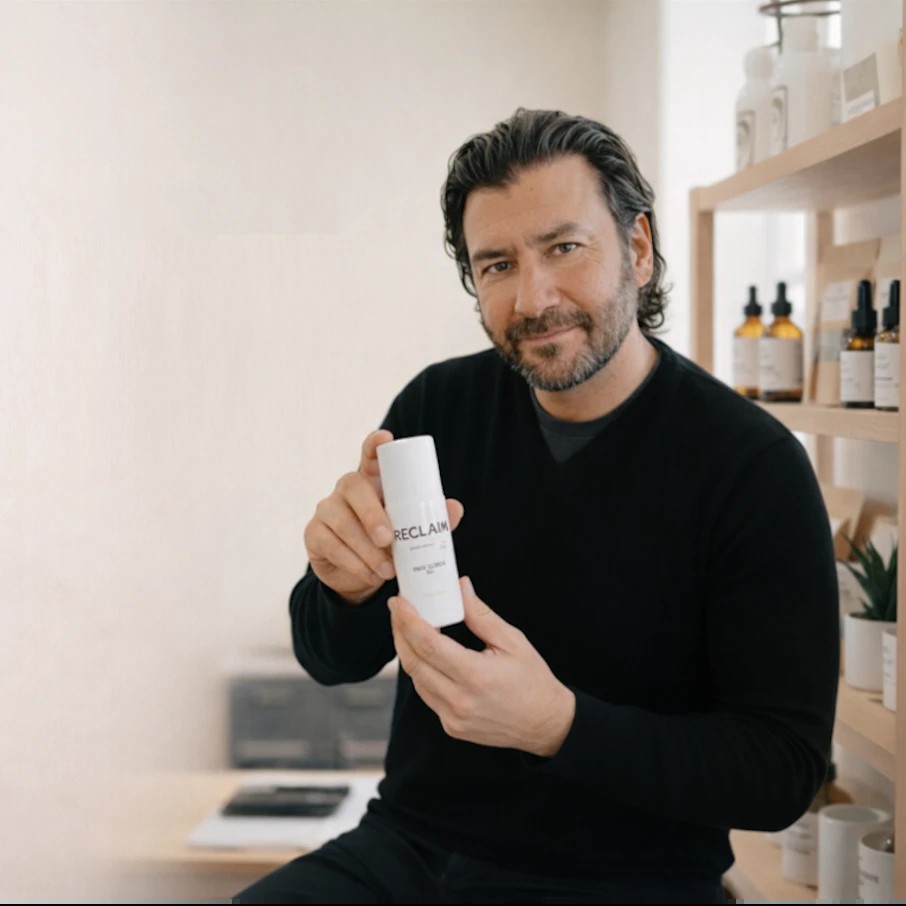
Who Ron is
Ron was diagnosed with rheumatoid arthritis at 15 and spent 23 years trying to get his life back from it — including a long stretch on chronic prednisone. He self-formulated the broad-spectrum CBD oil that became Reclaim's flagship product after doing his own research into the pharmacology. Reclaim Labs exists because that formula gave him his life back. His experience with the medical system, with chronic pain, and with the gap between CBD marketing and the actual evidence shapes the research content on this site.
The diagnosis
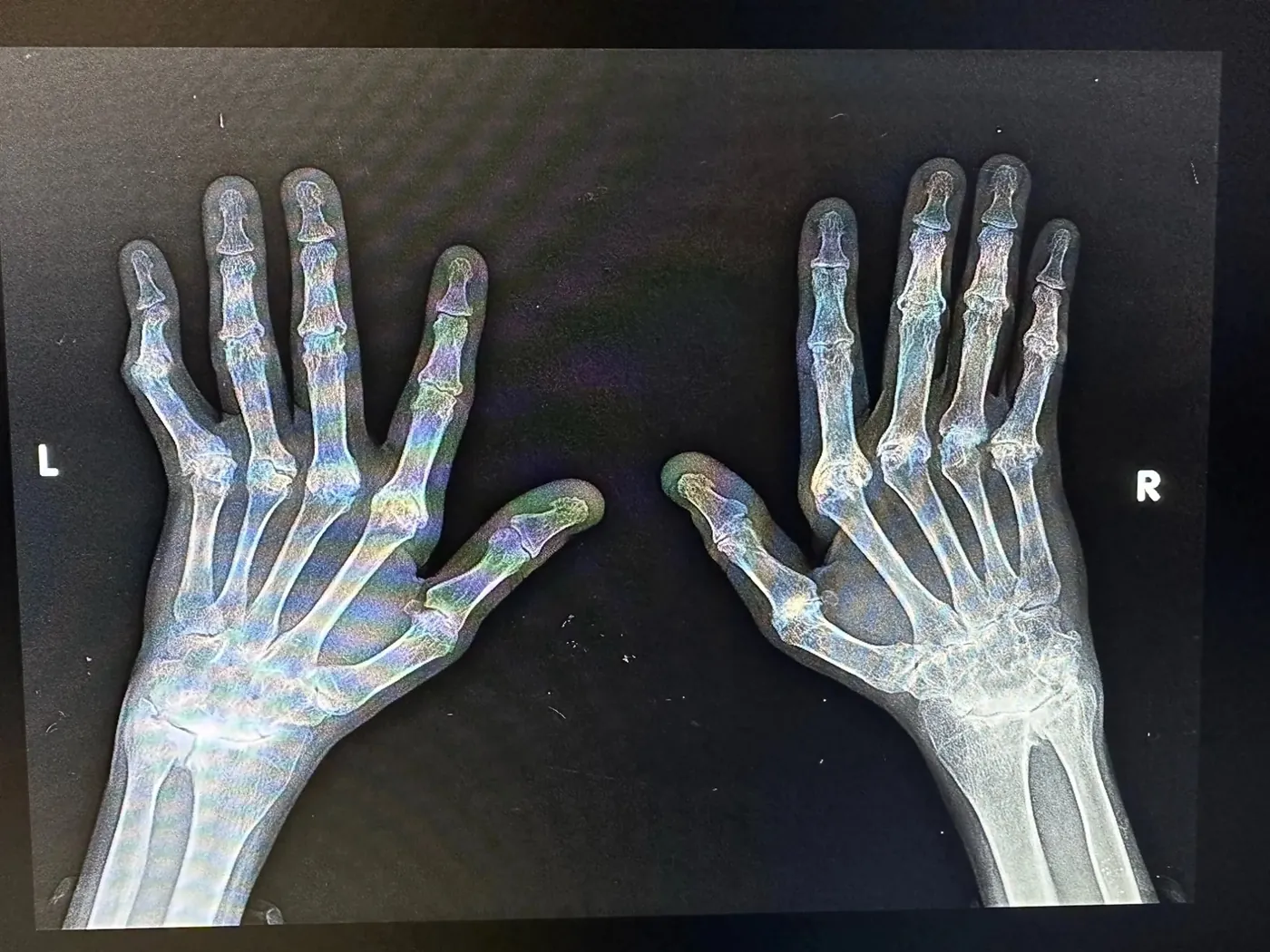
Ron's hands. The joint erosion visible here is characteristic of long-standing RA.
Ron was diagnosed with rheumatoid arthritis at 15 — young enough that most of the rheumatologists he saw had limited experience with juvenile-onset RA. The disease is systemic: not just joint pain, but fatigue, flares that restructure your week around the bad days, and a treatment protocol that often trades one problem for another.
For years, the mainstay was prednisone. It works — glucocorticoids suppress the immune cascade that drives RA. But chronic prednisone use at the doses required for disease control carries a well-documented long-term cost: bone density loss, metabolic effects, adrenal suppression, and the compounding challenge of tapering without triggering a flare. Ron spent years on this treadmill.
The self-formulation
CBD entered the picture the way it does for most people who take it seriously: not from marketing, but from desperation and curiosity. Ron started reading into the research , the pharmacology, the clinical trials, the mechanistic work on cannabinoid receptors and inflammation pathways.
What he found was more complicated than the marketing suggested, and more promising than the skeptics acknowledged. CBD's effects on cytokines are inconsistent in the RCT literature. Its sleep signal, its joint-comfort reports in OA patients, and its safety profile at therapeutic doses are more defensible. The dose-response is not linear — the inverted-U pattern documented by Linares 2019 (meaning more isn't always better) means that too little has no effect, and at very high doses the benefit can actually reverse. Most off-the-shelf products are dosed without any reference to this pharmacology.
He formulated his own broad-spectrum oil: THC-free, high potency (2800mg per ounce), whole-plant cannabinoid profile without the drug-test exposure of trace THC. He took it. It worked — not as a cure for RA, not as a replacement for his rheumatology protocol, but as a meaningful addition to it. The inflammation quieted. Sleep improved. The prednisone dependency became something he could have a more honest conversation with his prescriber about.
"I didn't start Reclaim Labs to sell CBD. I started it because this formula gave me my life back."
What experience does and doesn't give you
Lived experience with a condition is a specific kind of credential. It means Ron reads the VOC (what customers actually say — the Reddit threads, the patient forums, the Facebook groups where people with RA and Hashimoto's and fibromyalgia are trying to figure out whether CBD is worth trying while on methotrexate) — not as a researcher looking at data from outside, but as someone who posted in those threads.
It also means understanding the gap between the literature and the clinic. Most rheumatologists are not CBD experts. A 2018 Arthritis Foundation survey found that 58% of patients who brought up CBD with their doctor didn't get useful information back. The research desk at Reclaim exists to fill that gap — not to replace the prescriber conversation, but to make it more productive.
What lived experience doesn't give you: generalizability. Ron has RA. The Reclaim Labs research desk covers six content pillars — autoimmune, joint, sports recovery, inflammaging, sleep-stress, and CBD science — because inflammation shows up differently across conditions and audiences. For conditions Ron cannot personally attest to (notably perimenopause-related inflammation, which is the largest under-served cohort in our VOC — what customers actually say — research), the content is anchored in customer evidence and the peer-reviewed literature, not in his experience.
How this shapes the site
The research-based content on this site follows three principles:
- Cite the actual study. Not "studies show" — the specific PMID, the sample size, the design, and whether it was in humans or rats. Readers can check.
- Acknowledge the null trials. Sports-recovery RCTs for CBD are mostly null. The cytokine RCTs are inconsistent. Saying so builds more trust than pretending the signal is clean.
- Never clinical claim language. CBD "may support" joint comfort; it does not "treat arthritis." The distinction is not just legal — it's accurate. The evidence doesn't support the stronger claim.
Products
The three products in the Reclaim Labs line — the 2800mg broad-spectrum oil, the NANO 1000mg roll-on, and the 50mg transdermal patches - reflect the same logic that drove the self-formulation: potency matters, delivery format changes pharmacokinetics, and drug-test safety is a real consideration for many users in the inflammation cohort. The oil is THC-free. The roll-on uses nano-emulsion for 3–5× deeper transdermal delivery than standard topicals (Reddy 2023). The patches are isolate - no THC at all.