Getting off prednisone after 23 years: what finally made it possible
Twenty-three years is a long time to take the same drug every morning.
I started prednisone in my early twenties, not long after my rheumatoid arthritis flared badly enough that my rheumatologist needed to bridge me while we waited for other treatments to kick in. That bridge lasted two decades. I knew the risks. I watched my bone density scans deteriorate. I dealt with the weight changes, the mood shifts, the swelling in my face. At a certain point, prednisone stopped being a treatment and became the baseline, the thing my body expected every day in order to function.
I’m writing this because I did get off it. It took several years of gradual tapering, a very patient rheumatologist, and a meaningful reduction in my baseline inflammation level. CBD was part of that last piece. Not the whole story. Part of it.
What 23 years on prednisone actually does to your body
Prednisone is a synthetic corticosteroid that suppresses inflammation by mimicking cortisol. It works. That’s the problem with it, it works so well that your prescriber keeps renewing it, and your body keeps accepting it, and years go by.
What the long-term literature documents isn’t subtle. Bone density loss (osteoporosis) is the one I monitored most closely. Prednisone interferes with calcium absorption and increases bone resorption. After a decade at even moderate doses, DEXA scans start to look concerning. I developed osteopenia. Others on longer courses develop frank osteoporosis.
Beyond bone density: elevated blood sugar (sometimes tipping into steroid-induced diabetes), cataracts, increased infection susceptibility from immune suppression, skin thinning and bruising easily, adrenal axis suppression. That last one matters most when you want to stop.
When you take exogenous corticosteroids for long enough, your hypothalamic-pituitary-adrenal (HPA) axis downregulates. Your adrenal glands stop producing adequate cortisol because they’re getting the signal that there’s enough already. Stop the prednisone suddenly after years of this and you risk adrenal insufficiency, a medical emergency in severe cases, and a prolonged, miserable experience in mild-to-moderate cases.
This is why you cannot just stop. You taper. Slowly.
What the research says about CBD and inflammation in RA
I want to be precise about this because vague CBD claims bother me as much as they probably bother you.
There is genuine preclinical evidence that cannabidiol modulates inflammatory pathways relevant to autoimmune conditions: NF-kB signaling, TNF-alpha, IL-6, and several others. In rat models of arthritis, oral CBD reduced joint swelling and behavioral markers of pain (Hammell 2016, which was actually a transdermal study; Philpott 2017 for the oral RA model).
What the literature does not yet have: a rigorous randomized controlled trial in human RA patients specifically for CBD. The clinical evidence base is substantially weaker than the preclinical signal. I hold both of those things at the same time when I talk about my own experience.
What I know from my own body: when I started taking CBD consistently (I started with a broad-spectrum oil at a dose I titrated up over several weeks), the morning stiffness that had defined my mornings for years became more manageable. My CRP levels, which my rheumatologist checks every three months, drifted lower over the following two years. I cannot attribute that entirely to CBD, I was also doing other things, including changing some habits. But the correlation was there, and my rheumatologist noticed it.
How the taper actually worked
My rheumatologist and I had discussed tapering prednisone for years. The obstacle was always the same: whenever we reduced the dose even slightly, symptoms returned enough that we backed off. The inflammation floor was just too high.
What changed was that my baseline improved enough that the taper became achievable. We went slowly: dropping by 1mg every 6-8 weeks, monitoring symptoms between drops, pausing whenever needed. The whole process took about two years from starting the taper to reaching zero.
I cannot tell you that CBD was the reason. I also cannot tell you it wasn’t. What I can say is that the timing coincided with consistent CBD use, and that I noticed less reactivity during the taper than I had during previous attempts.
The other thing I’ll say: adrenal recovery is real and it takes time. Even after stopping prednisone, I felt a level of fatigue that took many months to resolve. My body’s own cortisol production had been suppressed for so long that it needed time to remember how to do it. That is not a CBD issue or an RA issue, it’s just what happens after decades of exogenous corticosteroids.
What I would tell someone who has been on prednisone long-term
Tapering after long-term use requires prescriber supervision. This is not a hedge, it’s practical. Adrenal insufficiency can be serious, and the taper schedule needs to be calibrated to your specific situation. Do not attempt to taper prednisone independently because you read something online, including this.
If you are interested in whether CBD could help reduce your baseline inflammation enough to make a taper more feasible, have that conversation with your rheumatologist before starting. The CYP3A4 interaction between CBD and prednisone is generally considered low concern at typical doses, but your prescriber should know what you are taking.
The prednisone drug interaction page on this site has more detail on the pharmacological picture. That page was written specifically for people trying to understand the mechanism, not just the summary.
Twenty-three years is a long time. Getting off it was one of the more meaningful things that has happened to my body in the last decade.
Frequently asked questions
Is it safe to stop prednisone while taking CBD?
Prednisone must always be tapered, never stopped abruptly. Your adrenal glands need time to resume normal cortisol production after years of suppression. CBD does not replace prednisone. For me, CBD gave me enough baseline inflammation relief that my rheumatologist was able to supervise a very slow taper. Do not attempt this without your prescriber involved.
Does CBD interact with prednisone?
CBD is metabolized partly by CYP3A4, the same enzyme that clears prednisone. There is a theoretical interaction, but at typical CBD doses it is generally considered low concern. The more significant issue with long-term prednisone is what happens during tapering: adrenal insufficiency symptoms (fatigue, dizziness, nausea) can be significant. Talk to your rheumatologist before changing anything.
How long does it take to taper off prednisone after years of use?
It varies substantially and depends on how long you've been on it, your current dose, and your underlying condition. After 23 years, my taper was gradual and supervised. Rushing it is not advisable and can lead to an adrenal crisis.
What are the long-term effects of prednisone I should know about?
Long-term corticosteroid use is associated with bone density loss (osteoporosis risk), elevated blood sugar, cataracts, weight gain, adrenal suppression, and skin thinning. I developed several of these over 23 years. Your prescriber should be monitoring bone density if you have been on prednisone for more than a year.
Products referenced in this post
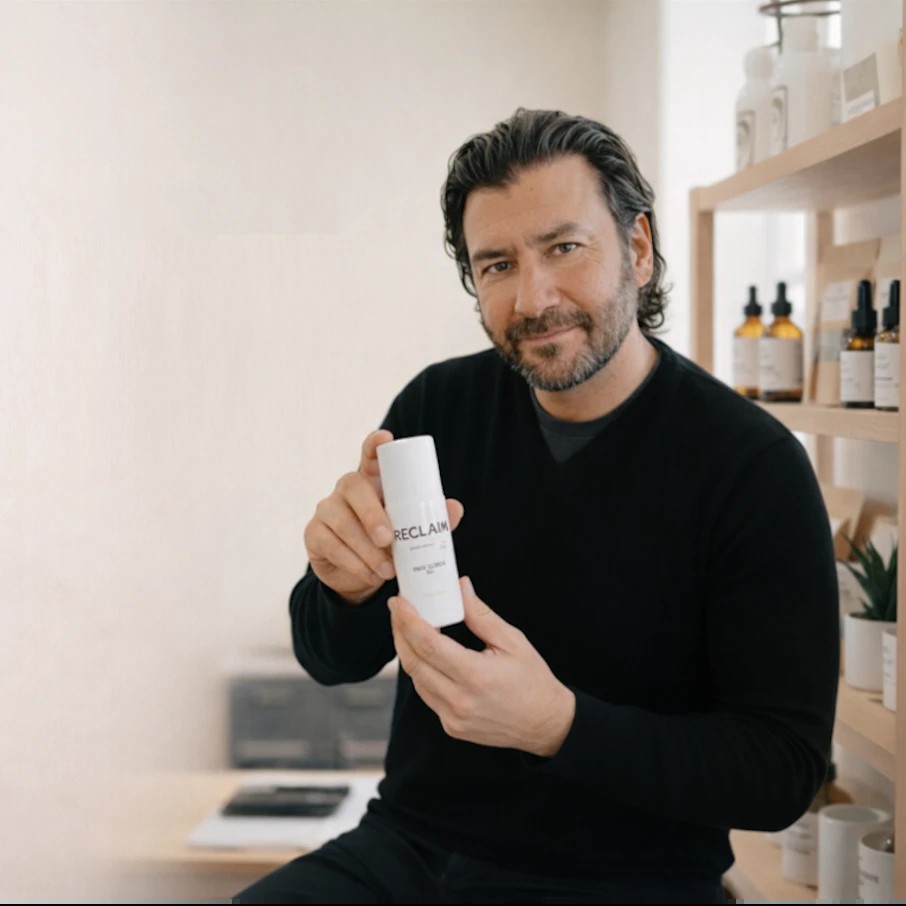
Founder of Reclaim Labs. Diagnosed with rheumatoid arthritis at 15, Ron spent 30 years navigating the medical system before self-formulating the broad-spectrum CBD oil that became Reclaim's flagship product. He reads the CBD-pharmacology literature closely and writes from lived experience, not marketing copy.