The best natural supplements for joint mobility: what actually has evidence behind it
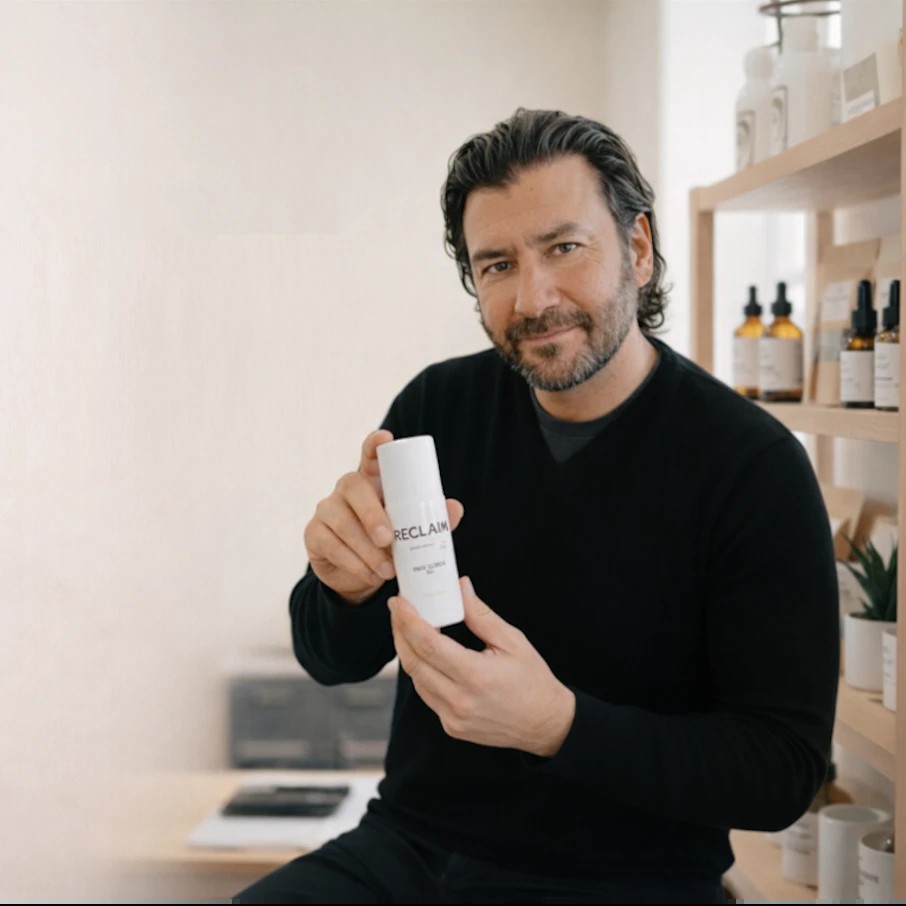
If you’re searching for the best natural supplements for joint mobility, here’s the direct answer: omega-3 fatty acids and boswellia serrata have the most consistent human trial evidence for reducing joint pain and stiffness. Curcumin from turmeric has strong mechanistic support but requires a high-bioavailability formulation to matter. CBD shows real anti-inflammatory activity in preclinical research and is what I use personally, though large-scale human trials are still limited.
I’ve had rheumatoid arthritis since I was 15. That’s more than 30 years of medications, experiments, and reading research on what helps beyond standard pharmacology. I’ve been on methotrexate, Plaquenil, Celebrex, 23 years of prednisone, and seven years of rituximab infusions. I’ve also spent a lot of that time trying to figure out what supplements, if any, make a meaningful difference.
Most supplement lists you find online are written by people who get paid when you click and buy. The studies they cite are often manufacturer-funded, small, or conducted on cell cultures rather than actual humans with joint problems. Here’s what I actually think is worth knowing.
How to read supplement evidence before believing any of it
Three things to look for: Was it a randomized controlled trial in humans, or just a lab study or animal model? Was it funded by the supplement manufacturer? Was the endpoint something clinically meaningful - pain scores, function, stiffness duration - or just a biomarker that may not translate to how you feel?
A supplement can reduce an inflammatory marker in a test tube and do nothing for your joints. I’ve learned to filter for this distinction. The six supplements below are ranked roughly by how impressed I am with the human trial evidence.
Omega-3 fatty acids: the most consistent evidence for joint inflammation
EPA and DHA, the long-chain omega-3 fatty acids found in fish oil, reduce joint inflammation through a well-characterized mechanism. They compete with arachidonic acid for enzyme pathways, producing anti-inflammatory resolvins and protectins instead of the pro-inflammatory eicosanoids that contribute to joint swelling and stiffness.
Multiple randomized controlled trials in RA patients have shown reduced joint tenderness counts and shorter morning stiffness duration with fish oil supplementation. The doses used in those trials typically range from 2.7g to 4g of combined EPA+DHA daily - significantly more than the 1g most over-the-counter fish oil capsules provide.
I take fish oil at clinical doses. The relevant caution: at high doses, omega-3s have anticoagulant effects. If you’re on warfarin or other blood thinners, discuss the dose with your prescriber first.
Curcumin: strong mechanism, real absorption problem
Curcumin is the active compound in turmeric root. It inhibits NF-kB, a master transcription factor that drives production of inflammatory cytokines including TNF-alpha and IL-6. These are the same targets that expensive biologics aim at - curcumin’s effect is far weaker, but the pathway is real and well-characterized.
The problem: standard turmeric powder and most curcumin capsules are poorly absorbed. Unformulated curcumin is rapidly metabolized in the gut and has bioavailability measured in fractions of a percent. High-bioavailability formulations - piperine combinations, liposomal curcumin, or phytosomal forms like Meriva - show dramatically better absorption in pharmacokinetic studies.
If you’re going to try curcumin, the formulation matters more than the dose number on the label. I take a high-bioavailability curcumin supplement most days and have for years. Whether it’s doing something measurable is hard to say, but the mechanistic case is strong enough that I continue it.
Boswellia serrata: underused and underrated
Boswellia serrata extract inhibits 5-lipoxygenase (5-LOX), the enzyme that produces leukotrienes - a class of inflammatory mediators involved in joint swelling that COX inhibitors like NSAIDs do not directly address. This is a complementary mechanism: boswellia and curcumin hit different parts of the inflammatory cascade.
The 5-LOXIN extract, standardized to include AKBA (acetyl-11-keto-beta-boswellic acid), shows more consistent results in clinical trials than standard boswellic acid extracts. Multiple randomized trials in knee OA patients have found meaningful reductions in pain and improved joint function with 5-LOXIN specifically.
Boswellia is the supplement I’d most strongly recommend to anyone who hasn’t tried it. It gets far less attention than turmeric despite having comparable or better clinical trial support, probably because it’s harder to market.
Type II collagen peptides: specific to cartilage
Not all collagen is the same. Type I collagen is skin, tendons, and bone. Type II is the collagen that makes up articular cartilage - the tissue that erodes in osteoarthritis and gets attacked by the immune system in RA. Undenatured (native) type II collagen appears to work through oral tolerance mechanisms, training the immune system to be less reactive to joint cartilage proteins.
Some randomized trials have found improvements in knee OA pain with surprisingly small doses of undenatured type II collagen - as low as 40mg in some studies. This is mechanistically different from the gram-level doses of hydrolyzed collagen powder sold as a protein supplement. If you’re specifically interested in cartilage support, the product type matters: look for native type II collagen, not hydrolyzed.
Glucosamine and chondroitin: the most studied, most debated
The GAIT trial was a large NIH-funded randomized controlled trial testing glucosamine, chondroitin sulfate, and their combination against placebo and Celebrex in knee OA. The headline result: the combination did not outperform placebo for the full trial population. A subgroup with moderate-to-severe pain did show meaningful benefit - which is a real finding buried inside an overall negative result.
The supplements are safe for long-term use. Some people report genuine benefit. Others notice nothing. I tried glucosamine for several months without noticing any difference. If I had knee OA specifically with significant pain, I’d run a three-month trial before concluding it doesn’t work - the subgroup signal is real enough to warrant testing.
CBD: what I use and why it’s the anchor of my approach
I started taking CBD oil after 23 years on daily prednisone. Getting off prednisone was the result of years of work, and CBD was a central part of what made it possible. I am not telling you CBD cures anything - it doesn’t, and I’m skeptical of CBD marketing just like I’m skeptical of any supplement marketing.
What I can say: the endocannabinoid system is genuinely involved in both pain modulation and immune function. CBD’s interaction with CB2 receptors, expressed widely on immune cells, appears to modulate the inflammatory cascade in ways that are relevant to joint disease. There’s preclinical research supporting this; large human RCTs are still limited.
I take 2800mg broad-spectrum CBD oil daily. I started at half a dropper (weeks 1-2) and moved to a full dropper (1ml) from week 3. If you’re on multiple medications, read the drug interaction information at /learn/drug-interactions/ before starting - CBD affects CYP450 liver enzymes and can change how certain medications metabolize.
What I actually take
Daily: high-bioavailability curcumin, fish oil at clinical dose, CBD oil. Periodically: boswellia during active inflammation, undenatured type II collagen in cycles. I tried glucosamine for three months and noticed nothing.
No supplement replaces disease-modifying treatment if you have inflammatory arthritis. These are adjuncts - some of them useful ones - but they work alongside proper treatment, not instead of it.
Frequently asked questions
What is the best natural supplement for joint mobility?
The strongest human trial evidence points to omega-3 fatty acids and boswellia serrata for reducing joint stiffness and pain. Curcumin is well-studied mechanically but requires a high-bioavailability formulation to absorb properly. No single supplement works for everyone, and none replaces disease-modifying treatment for conditions like rheumatoid arthritis.
Does glucosamine actually work for joint mobility?
The evidence is genuinely mixed. The GAIT trial, a large NIH-funded randomized study, found no benefit for the overall group but a meaningful signal in patients with moderate-to-severe OA pain. Glucosamine appears safe long-term and some people report real benefit - the honest answer is it works for some and probably does nothing for others.
Is turmeric or CBD better for joint inflammation?
They work through different mechanisms and can complement each other. Curcumin inhibits NF-kB and COX-2 pathways, similar in some ways to NSAIDs. CBD works through the endocannabinoid system, modulating CB2 receptors and TNF-alpha. Neither replaces disease-modifying treatment, and both require proper formulation to achieve useful blood levels.
Can you combine multiple joint mobility supplements safely?
Many combinations are reasonable - omega-3s and curcumin together work through complementary pathways, for example. The main caution is that some supplements affect the same liver enzymes (CYP450) as medications. Before adding CBD to a regimen that includes blood thinners or certain antidepressants, check the interaction profile at /learn/drug-interactions/.
Products referenced in this post
Founder of Reclaim Labs. Diagnosed with rheumatoid arthritis at 15, Ron spent 30 years navigating the medical system before self-formulating the broad-spectrum CBD oil that became Reclaim's flagship product. He reads the CBD-pharmacology literature closely and writes from lived experience, not marketing copy.